Room for big ideas.
A Mac Studio’s unified memory makes space for larger language and reasoning models.
Apple Silicon · native engines OpenPotluck.
Local AI, better together
Your machine has a specialty.
Your friends’ machines have others.
What
if everyone could share?
Meet OpenPotluck: one local gateway for your AI models, with a table of trusted machines for everything else.
A place for every machineIn development. A first look at what we’re building.
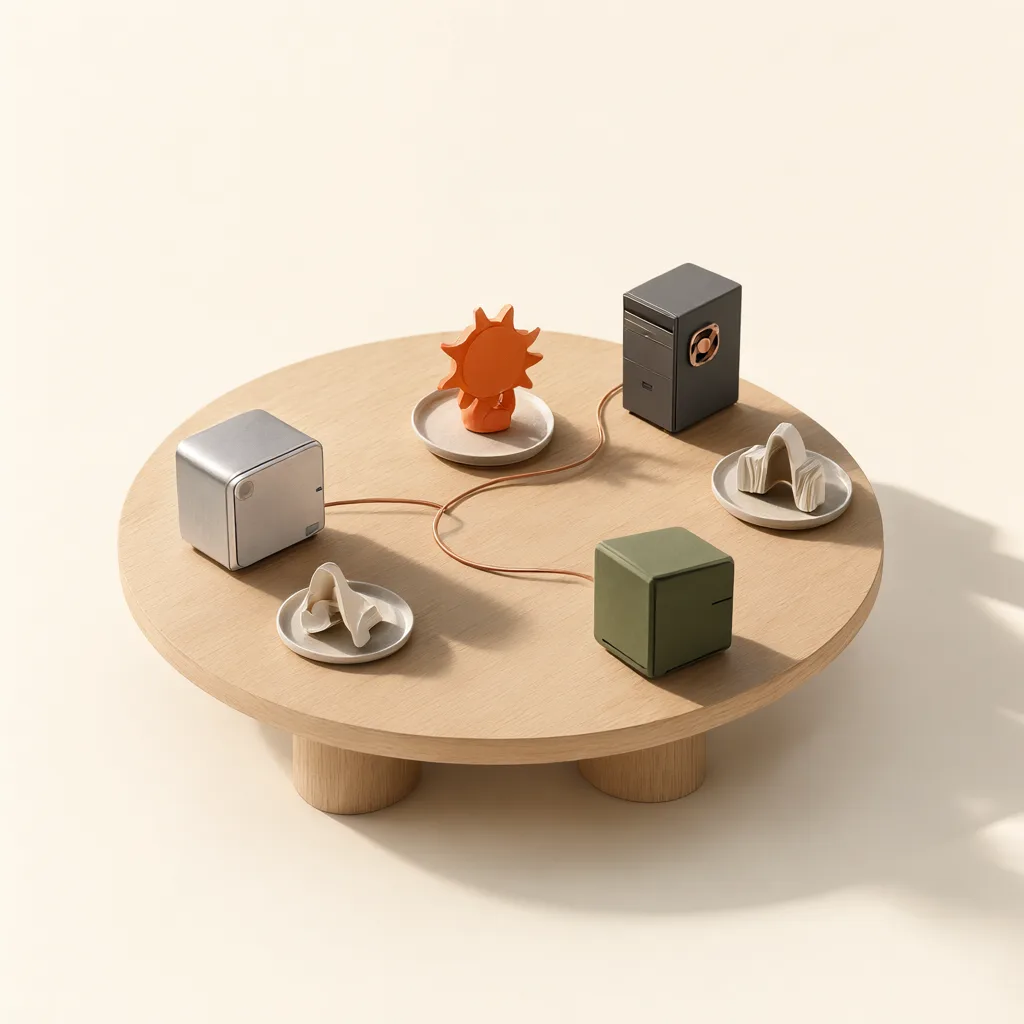
01 / The bigger picture
You shouldn’t need a room full of hardware to have a full set of AI tools. Keep what your machine does best close at hand. Let the table fill in the rest.
The plan starts at home: your own models answer locally, without spending servings. You decide how much spare capacity to offer, and your work always comes first.
A memory-rich Mac can keep a reasoning model ready. A friend’s NVIDIA workstation can bring images and speech. The gateway routes a whole request to the machine that has the right dish hot.
Serve a friend with your idle capacity and earn servings. Spend them on another dish, or buy them when you need more. Servings are service credits, never cash payouts or crypto.
The architecture / A closer look
Two members bring hardware. Another brings only an idea. The same table connects all three.
02 / Less tinkering, more doing
Model tuning is a rabbit hole. The cookbook is our way out: curated, signed recipes matched to your machine’s memory, accelerator, and available resources.
A recipe pins the model, quantization, engine, and settings together. Speed and quality sit beside each other. You see what you’re running, and why it fits.
A few words from our kitchenRECIPE / 001 · CONCEPT
A reasoning dish for a memory-rich Mac.
Anatomy of a recipe. Not a performance claim.
03 / Everyone brings something
Starting with macOS and Linux. From Apple Silicon and NVIDIA GPUs to roomy unified-memory systems, the cookbook is designed around what you actually have.
A Mac Studio’s unified memory makes space for larger language and reasoning models.
Apple Silicon · native enginesA Linux GPU box can bring image generation, a coding model, or a fast speech engine to the table.
NVIDIA · images, code & audioDGX and AMD unified-memory machines expand the menu. Recipes will be qualified hardware by hardware.
A growing cookbook04 / The people at your table matter
A friend’s machine still sees the request it serves. That’s why private tables are the starting point, and your own machine is always the first choice.
Choose the capacity, schedule, and tables you share with. Your basket enforces those limits locally.
Signed recipes protect the software an honest basket installs. Planned external checks help detect misconfigured or dishonest peers; signatures alone can’t prove how a peer behaves.
Table participation requires speed, latency, memory, and recipe telemetry. Prompts and outputs are not part of that telemetry.
The basket and gateway are being built to be open source. A public table is a later chapter, with more work to do on verification and privacy.
A small field guide
A few familiar words for a different way to think about AI infrastructure.
À la carte, by design
OpenPotluck is the serving layer. Retort is an independent agent harness. Tic is a workspace for long-running agents. Use any one, any pair, or all three.
The gateway is designed to speak the OpenAI protocol, so your choice of editor, chat interface, or agent stays yours.
The models. The hardware. The table.
The agent that works with your models.
The place your agents live and work.
A potluck for local AI
We’re building OpenPotluck for people who believe
their own hardware can do more. Together.